| |
| Thursday, 17 September 2026 |
| Artemisia Gentileschi |
| Chantal Brotherton-Ratcliffe |
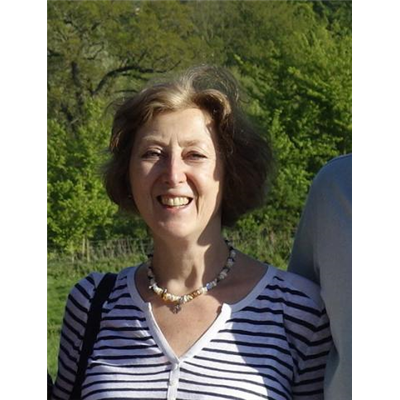 |
What skills did it take for a woman to become a painter in 17th century Europe? Artemisia Gentileschi (1593-1654) was by no means the only woman painter of her period, but she is a rarity, and she also ranks amongst the greatest painters of the 17th century. Her career spanned a time of great change in Italian taste, from the power and earthiness of Caravaggio, to the more elegant classicism of Reni and Domenichino. Her family connections meant that she moved between a number of different centres in Europe - Rome, Florence, Naples and London, and her work reflects the different tastes of these centres. MA in History of Art from Edinburgh, PhD from the Warburg Institute, London University. With 40 years' experience as a lecturer, Chantal has taught at Sotheby's Institute of Art on the MA in Fine and Decorative Arts since 1989, and as a freelance lecturer for a number of societies and institutions in London, including the National Gallery and the Wallace Collection. Having also trained as a paintings conservator, she brings an understanding of the making and the physical painting to her lectures and study sessions. |
|
| Thursday, 15 October 2026 |
| The Art of The Automobile |
| Roger Mendham |
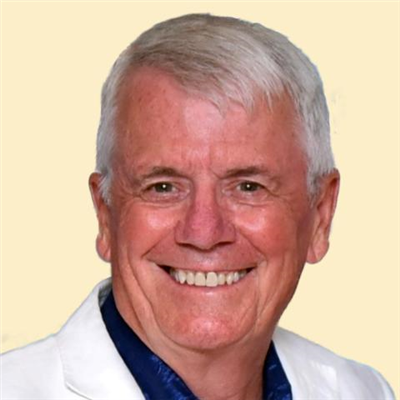 |
The earliest cars were purely functional and lacked even the most basic of passenger comforts, such as doors or even windscreens to protect passengers from the elements. However, progress was rapid and by the mid-1920s we entered a golden age of automobile design. A new generation of stylish cars were influenced by the art deco movement and the ‘Great Gatsby era’ included some of the most famous and fabulous cars ever built. This period was followed by the Streamline Moderne influenced cars of the 1930s and 40s, with aerodynamic shapes and lots of chrome detailing. This talk covers some of the most beautiful cars ever built, and focuses on the work of the coachbuilders, who were inspired by the art movements and created ‘mobile works of art’. A keen and accomplished photographer Roger has gained Distinctions from the Royal Photographic Society and is currently the President of the Surrey Photographic Association. His artistic taste is predominantly 20th century and he is particularly interested in the visual aspects of art. He has studied the evolution of photography from its earliest days in the early 1800s to becoming a major art form in the late 20th and now 21st centuries. An experienced public speaker, his talks are all richly illustrated with both his own and images from some of the leading photographers in history. |
|
| Thursday, 19 November 2026 |
| Dick Whittington: International Man of Myth & Myster(ie) |
| Smon Whitehouse |
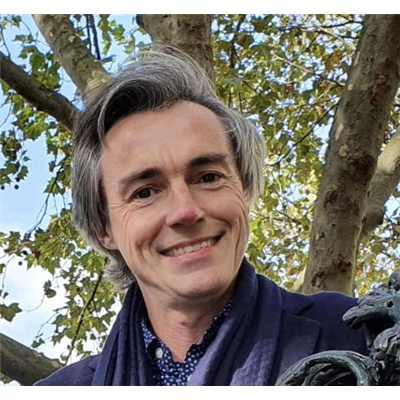 |
2023 marked the 600th anniversary of the death of the fabled Dick Whittington (c1354-1423). For many of us, Dick is simply a fictional character from a Ladybird book or the Christmas pantomime. In fact, Dick was very real, indeed one of the major movers and shakers of medieval London. In this lecture we separate the man from the myth as we follow in his footsteps through the streets that were not exactly ‘paved with gold…’. Apprenticed to a master mercer, Whittington went on to become one of the wealthiest and most successful textile merchants in the City, bankrolled no fewer than three medieval kings and as a result held the office of Lord Mayor of London no fewer than four times. And what of that famous feline companion; his cat? Well, the church that he built might just provide the answer but the lecture reveals all…. Simon is a (recovering) actor, lecturer, presenter, Alexander Technique and voice teacher and award winning London Blue Badge guide. He has worked as a guide lecturer in house at Shakespeare’s Globe, the Royal Opera House, the BBC and the National Gallery guiding both public and private tours. He is on the faculty of Ithaca College and also lectures for the Blue Badge Guide training course on the performing arts and English literature. Simon’s specialisms and passions are theatre, literature, fashion and art history but whatever the subject, Simon will weave a wonderful story from it. |
|
| Thursday, 10 December 2026 |
| London's Lost Department Stores |
| Tessa Boase |
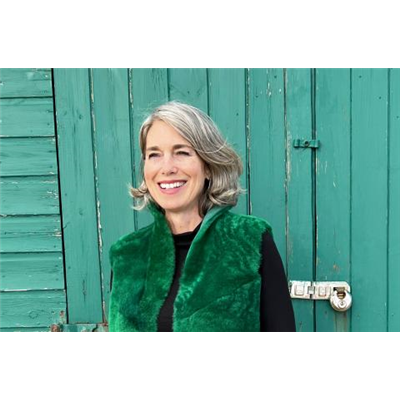 |
London’s sumptuous Victorian and Edwardian department stores changed the capital – and changed its women. Shoppers of every rank were lavishly wooed, seduced and often undone by the temptations laid out before them in these new ‘cathedrals of desire’. Starting on Oxford Street’s ‘golden mile’, we’ll set off on a cultural tour of the capital’s big stores – from snooty Marshall & Snelgrove, to Pontings, ‘House of Value’; from Kennards’ wart-removal service, to the live flamingos atop Derry & Toms; from Bodgers of Ilford, to Bon Marché of Brixton. How did it feel to enter a great store in the lavish Edwardian era? What was it like to serve? From shoppers to shop girls, publicity stunts to wow factor window dressing, this is a fascinating slice of social history, with wonderful period images. Tessa Boase is a freelance journalist, author, lecturer and campaigner with an interest in uncovering the stories of invisible women from the 19th and early 20th-centuries – revealing how they drove industry, propped up society and influenced politics. She’s the author of three books of social history: The Housekeeper’s Tale: The Women Who Really Ran the English Country House (2014); Etta Lemon: The Woman Who Saved the Birds (first published as Mrs Pankhurst’s Purple Feather in 2018), and London’s Lost Department Stores: A Vanished World of Dazzle and Dreams (2022). Since uncovering the feminist origins of the RSPB, Tessa has been campaigning for public recognition of its female founders with plaques, portraits and a statue. |
|
| Thursday, 21 January 2027 |
| The Mystery of Holbein's 'Ambassadors' |
| Anthony Russell |
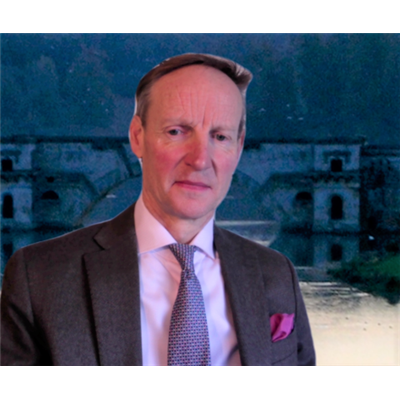 |
Hans Holbein was the first great mainland painter to spend much time in England and he brought with him a sophistication and skill, with far reaching consequences for this island's artistic development. His Ambassadors is recognised by the National Gallery of London as one of its greatest treasures. It dates from a tradition in the arts when no object was without meaning and symbolism. However, practically all of this meaning has been lost to the modern observer. This lecture considers the tempestuous circumstances of its creation and the hidden messages concealed within it. The painting tells us much about the state of Europe at the time and the hopes and fears of its major players. As a cultural historian, writer and artist Anthony Russell has travelled much of the world. Lecturing originally to American university students on bespoke tours of Europe, he has lectured for the Arts Society since 2010. He spent six years as a consultant for Luke Hughes advising on the furniture needs of prestigious buildings throughout Britain, including museums, palaces, and cathedrals. At the British Museum, where for many years he ran outreach events and hosted visiting lecturers, he has been described as "Hugh Grant meets the Dalai Lama.” Committed to the 'search for civilisation' and as an advocate of nonviolence, he is the founder of The Chandos; supporting causes that promote understanding and cooperation, is on the committee for Uniting for Peace and a contributor to the All-Party Parliamentary Group on Democracy in Burma. He is author of the book ‘Evolving the Spirit - From Democracy to Peace' commended by Aung San Suu Kyi, the Nobel Peace Laureate, as meaning a great deal to her. He was also Founder of the Brockley Festival of Ideas and a Founding Advocate of CIVIL-ISATION. He is currently undertaking research for a new book on civilisation; what it is, whether we have it & how you get it. |
|
| Thursday, 18 February 2027 |
| Gotta Dance: The Hollywood Musical |
| Colin Shindler |
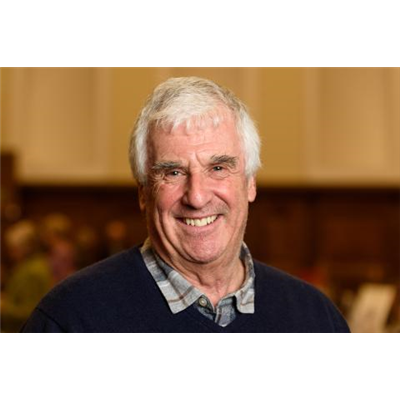 |
This lecture looks at the evolution of the Hollywood musical from the beginnings of the sound revolution in 1929 through its glory years in the golden age of Hollywood to its near disappearance at the end of the studio era and its occasional revival in recent years through The Producers and Chicago. Colin Shindler has been lecturing on American and British social and cultural history for over 30 years. He was awarded his PhD at Cambridge University and subsequently lectured on film for their History Faculty between 1998 and 2019 exploring its relationship to modern British and American social and cultural history. He also teaches a variety of adult education courses at Madingley and Higham Hall in Cumbria and has lectured on cruises. Between 1975 and 1999 he pursued a wide-ranging career as a writer and producer in television, radio and film. He won a BAFTA award for his production of A Little Princess. His production of Young Charlie Chaplin was nominated for a US Prime Time Emmy. He wrote the screenplay for the feature film Buster and was the producer of various television dramas such as Lovejoy and Wish Me Luck. He has written three novels as well as numerous television scripts and radio plays but regards his greatest cultural contribution as choosing the title music for the police series Juliet Bravo. His most recent radio play Leni Goes to Hollywood, about the German film director Leni Riefenstahl, was broadcast on Radio 4 in August 2021. Other radio plays for R4 included How To Be An Internee (about P.G. Wodehouse) and one on Private Eye & The Profumo Affair (Rumours). He is the author of Barbed Wire and Cucumber Sandwiches: The Controversial South Africa Cricket Tour of 1970 which was short listed for the MCC/Wisden Cricket Book of the Year in 2021. He is best known for his childhood memoir Manchester United Ruined My Life which was short listed for the William Hill Sports Book of the Year Award. His other publications include Hollywood Goes To War: Films & American Society 1939-1952 and Hollywood in Crisis: Films & American Society 1929-1939. His next book is called Boom!: The Story of a Generation. |
|
| Thursday, 18 March 2027 |
| Charles Rennie Mackintosh |
| Rosalind Whyte |
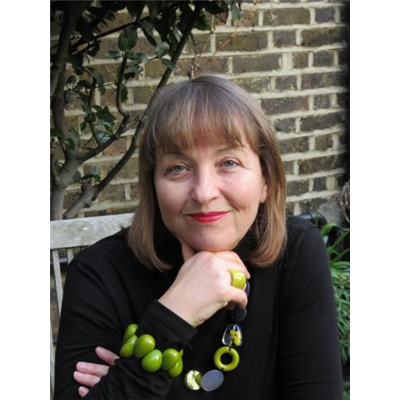 |
Scottish architect, designer and artist Charles Rennie Mackintosh is now a well-known name and a major draw for the tourist industry in Glasgow, with several of his buildings still existing, as well as his designs for Tea Rooms. However, his work was not always so well received and, following some early success, which included his architectural masterpiece, the Glasgow School of Art, his prospects floundered. In this lecture we track him from that early success in his native Glasgow, through the years of doubt and struggle, ultimately to the South of France where he enjoyed the last few years of his life travelling with his wife and collaborator Margaret and reinvented himself as a water colour painter. With a wonderful array of beautifully designed buildings, furniture and interiors to enjoy along the way, we explore the life and career of Charles Rennie Mackintosh.
Rosalind Whyte: BA and MA from Goldsmith’s College, and an MA (distinction) from Birkbeck College. Experienced guide at Tate Britain, Tate Modern, the Royal Academy and Greenwich. Lectures at Tate, to independent art societies and on cruises. |
|
| Thursday, 15 April 2027 |
| Pins & Poking Sticks - Courtly Dress in Shakespeare's Time |
| Jacqui Ansell |
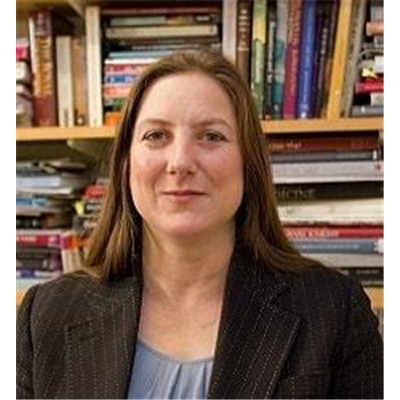 |
A contemporary of Shakespeare informs us that ‘a ship is sooner rigged by far than a Gentlewoman made ready’. In The Winter’s Tale Autolycus peddles ‘pins and poking sticks of steel’, seductive smocks, perfumed gloves, bugle beads and other irresistible items. What were these objects and what was their role in the ‘art’ of dress? Moral messages and secretive signals in emblematic jewellery and embroidery contributed to Elizabeth I’s image as the ‘Virgin Queen’. Elizabethan and Jacobean portraits will be decoded, to discover the role they played in courtly culture. Jacqui read History of Art and Theory at the University of Essex then gained an MA in History of Dress from the Courtauld Institute. Formerly an Education Officer at the National Gallery, London, and a tutor and writer for the Open University, she lectures regularly on the public programmes of the National Gallery, National Portrait Gallery and Wallace Collection. She's an expert on Court Dress, Grand Tour portraiture and Welsh Costume as well as dating and decoding dress in portraits, and has contributed specialist essays on these topics for the Wallace Collection, and Philip Mould. Jacqui has contributed to numerous National Gallery podcasts and appears on their Youtube channel lecturing on 'Love' (amongst other things). As Senior Lecturer at Christie's Education, London she prepared furture specialists in fine and decorative arts for the auction world, and wrote and presented numerous online courses on history of art, history of design and women artists (available for study now). Her 2023 lecture tour of New South Wales for the Australian Art Society was extremely well received, garnering reviews such as the following: 'Jacqui is exceptional. A detailed eloquent lecture without reference to any notes whatsoever. The images were outstanding, tested to their limits on a full-sized cinema screen' (Narrabri Arts Society for ''Pins and Poking Sticks': Dress in Shakespeare's Time 1564-1616') She is currently writing books on Fashion in National Gallery paintings, and on Vincent Van Gogh's time spent in England in 1876. |
|
| Thursday, 20 May 2027 |
| Scandinavian Landscape Painting 1840 - 1910 |
| Caroline Levisse |
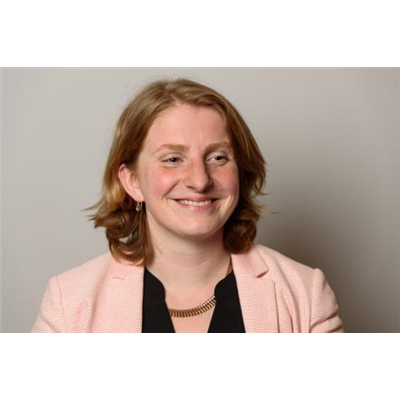 |
There is something special about Nordic nature. Its vastness, wilderness, and remoteness are some of the reasons it is so fascinating. Let’s not forget the exceptional light conditions, such as the midnight sun and auroras. Surely, nature has been a cornerstone of life in the Nordic countries. This importance is reflected in the history of art by the significant place held by landscape painting. We will explore various ways in which nature has been represented by Danish, Finnish, Norwegian and Swedish painters from 1840 to 1910. As we will see, nature was rarely just represented in a transparent, unmediated manner. It mirrored a national identity or an artist’s inner world. Dr Caroline Levisse is an art historian based in London. She was born in France where she studied art history before moving to Copenhagen. In Denmark, she focused on research work and completed a PhD on the relations between art and religion in contemporary Scandinavian art. After graduating in 2013, she moved to London and started teaching art history with adult education providers. She has since developed a range of courses focusing on 19th and early 20th century Western art. She has published articles in French and English in academic journals as well as magazines and newspapers, such as Church Times and Arts sacrés. |
|
| Thursday, 17 June 2027 |
| Art of The Harlem Renaissance |
| Sarah Jaffray |
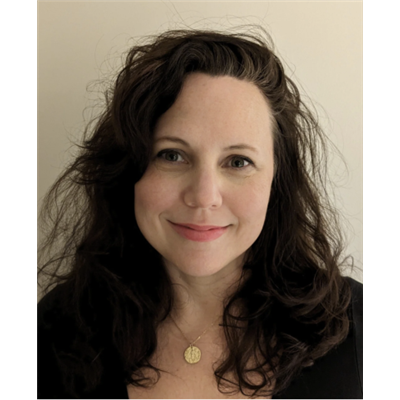 |
The Harlem Renaissance produced some of the greatest art and ideas of the 20th century. Most emphasis is (rightly) placed on the literary and musical achievements of its artists like Langston Hughes and Zora Neale Hurston, Billie Holiday and Duke Ellington. This lecture will tie in the work of these incredible artists with the period’s most famous painter, sculptor and photographer. This lecture provides a general historical context for the Harlem Renaissance before introducing the art of history painter Aaron Douglas, sculptor Meta Vaux Warrick and photographer James Van Der Zee, artists who visualised the aspirations of such a significant time and place. Sarah Jaffray is an art historian, educator, curator and writer based in London. Before her current position heading the art history programme at City Lit, Sarah worked as lead educator for the Bridget Riley Art Foundation in the Department of Prints and Drawings at the British Museum. She has also worked at Wellcome Collection exploring the connections of art, medicine and human experience. And, before relocating to London for family, she was as a tenured professor of Art History based in Los Angeles. Her MA in Art History focused on the links between poetry and painting in late 19th century France while her MA in Cultural Studies focused on photography and political protest. She lectures on a variety of topics and prefers to place artworks and objects in their wider social and cultural contexts, from the European Renaissance to the contemporary, emphasising new narratives and approaches to Western Art History. Her art historical research emphasises modern art, the politics and philosophies of the 19th and 20th centuries and how they are related to artistic process: drawing, printmaking, painting and photography. Awards, Qualifications & Memberships: MA Cultural Studies, Goldsmiths, University of London (2013) Merit
MA Art History, California State University, Long Beach (2006) Distinction
BA Art History, California State University, Long Beach (2002) First
Member: Association for Art History
Member: College Art Association |
|
| Thursday, 16 September 2027 |
| The Architecture of Mughal India: Palaces, Mosques, Gardens & Mausoleums |
| John Stevens |
 |
Before the British arrived in India, the Indian subcontinent was ruled by the Mughal Emperors. The stunning buildings and gardens they constructed from the sixteenth to the eighteenth century have left an indelible stamp on India’s architectural and cultural landscape. Mughal architecture fused elements from Islamic, Persian, Turkish and Indian architectural traditions, and gave rise to some of the most beautiful and iconic buildings in the world. From the Jama Masjid in Delhi, to the Taj Mahal in Agra, to the Shalimar Gardens in Lahore, this lecture will take you on a tour of some of India’s greatest buildings, and provide insight into the historical contexts and colourful personalities involved in their construction. Dr John Stevens gained his PhD in History from UCL, before going on to teach British Imperial History, Indian History and Bengali Language at the School of Oriental and African Studies (SOAS, University of London). His biography of the Indian guru Keshab Chandra Sen – Keshab: Bengal’s Forgotten Prophet - was published by Hurst and Oxford University Press in 2018. He is a regular visitor to India and Bangladesh and has lectured at numerous Indian universities. He also works as a consultant on Indian affairs and teaches the Bengali language to private students. He has appeared many times in the Indian media, and was a guest on BBC Radio Four’s In Our Time, discussing the poet and artist Rabindranath Tagore. |
|
| Thursday, 21 October 2027 |
| The Curious World of Pieter Breugel The Elder |
| Rupert Dickens |
 |
More than four centuries after his death the work of this intriguing artist continues to fascinate us. Bruegel’s brief career introduced new subjects of landscape and everyday life. But these apparently innocent and joyous pictures contain hidden social and political messages which are being rediscovered by scholars. An early biographer spoke of “Peasant Bruegel” and gave the impression of a naïve chronicler of folklore. But Bruegel is increasingly seen as an innovative artist providing a circle of humanist patrons with sophisticated and multi-layered compositions. This presentation will delve deeper into Bruegel’s work by exploring the most recent research. Rupert Dickens is an art historian based in south London with a special interest in Dutch and Flemish 16th and 17th century painting. He works at the Wallace Collection as a guide conducting public and private tours and lecturing on aspects of the collection. Rupert has accompanied groups on art-themed tours to the Netherlands, Belgium, France, Austria and Italy. He has lectured to large audiences on subjects as diverse as the game of chess in art and Madame de Pompadour’s artistic patronage in 18th century France. He studied art history at Birkbeck College before undertaking a Masters in Dutch Golden Age Studies at University College London. Before that Rupert had a 26-year career as a BBC journalist ending as an editor in radio news. |
|
| Thursday, 18 November 2027 |
| El Greco |
| Imogen Corrigan |
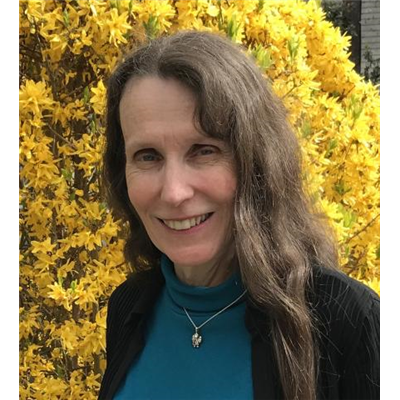 |
Domenikos Theotokopoulos, known as The Greek, became one of Spain’s most successful Mannerist painters. Born on Crete and starting out as icon painter, he went to Italy and then to Spain where he remained, staunchly Greek and a foreigner, until he died in Toledo aged 73 in 1614. Despite professional success in his lifetime, he was a poor manager: constantly in debt and a regular participant in law suits. Some have criticised his work, wondering if he was actually insane or even if he had an eye disorder. Others have been unable to resist the intense spirituality of line, his towering, flame-like figures and jewel colours. Although he trained with and was influenced by Renaissance greats such as Titian and Tintoretto, he developed his own distinctive style that makes his work instantly recognisable, although many are surprised to learn that he lived in the sixteenth/seventeenth centuries and not in more modern times. After nearly 20 years in the British army, went to the University of Kent to study Anglo-Saxon & Medieval History and Art, graduating with 1st class honours, followed by an MPhil from the University of Birmingham. Works as a freelance lecturer across Britain and Europe as well as lecturing on small cruise ships and running study tours and courses on land. Has written Stone on Stone: the Men Who Built the Cathedrals, published 2019. A Freeman of the City of London, being a Member of the Company of Communicators. Advisor on memorials and monuments for Canterbury's Diocesan Advisory Committee. |
|
| Thursday, 09 December 2027 |
| The Art of Celebrating: Carols, Consuming & Shopping during the Christmas Season, 1820 - 1930 |
| Mark Connelly |
 |
During the nineteenth century the nature of the Christmas we know today emerged. Not so much invented by the Victorians, as rediscovered, Christmas became a focal point in the year for a society dealing with the effects of industrialisation, urbanisation and the development of mass consumerism. From Dickens's seminal A Christmas Carol, the collection and distribution of folk carols, through to the emergence of the shop window display as an art form in its own right, Christmas is a legacy the Victorians have handed down to us and it continues to play a crucial role in our lives. I have always been obsessed with history. My Dad, a London cabbie, drove me around the streets of the capital from the youngest age showing me how every building and stone of London bears witness to the past. My passion for history led me to undergraduate and postgraduate degrees and then a career in University teaching and research. From 2008 to 2024 I was Professor of Modern British History at the University of Kent, and during the First World War centenary I was director of the Arts and Humanities Research Council-funded project, Gateways to the First World War, a centre designed to encourage public engagement with the centenary. This saw me engage with a wide range of organisations and groups and work in collaboration with the Department of Digital, Culture, Media and Sport. |
|
| Thursday, 20 January 2028 |
| The Art of The Cartoon |
| Harry Venning |
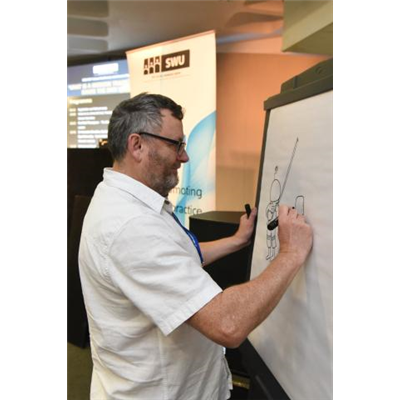 |
Harry Venning is a cartoonist, comedy writer and performer based in Brighton. Harry’s cartoons have appeared in publications as diverse as Mathematics Today, Radio Times, Music Teacher and The Stage. For twenty five years he provided The Guardian with the weekly strip cartoon Clare In The Community, about an unaware and empathy free social worker. In 2004 he developed Clare In The Community into a successful BBC Radio 4 sitcom starring Sally Philipps which ran for twelve series. When not at a desk , Harry tours his cartoon workshop around schools, theatres, arts centres, cruise ships and festivals. He is an accredited lecturer with the UK Arts Society, an Honorary Fellow of the English/Creative Writing departments of Aberystwyth University, resident cartoonist with the Blue Hat team building organisation, UK Social Workers Union honorary ambassador, winner of a Sony Radio Award for Comedy and a former UK Strip Cartoonist Of The Year. He cannot draw hands or horses. In 'The Art Of The Cartoonist' Harry will be tracing the history of his profession with examples from early practitioners like Cruickshank and Hogarth, to more contemporary artists such as Giles and Schulz, bringing events right up to date with cartoons produced fresh on the page that day! Yes, Harry will be drawing live. Prepare to hear some tricks of his trade, learn where to put eyebrows for maximum effect and discover exactly what the eskimo brothers said in The Funniest Joke Ever (possibly). |
|
| Thursday, 17 February 2028 |
| Princess Louise: an Aesthetic sculptor locked away in the Royal Archives |
| Lucinda Hawksley |
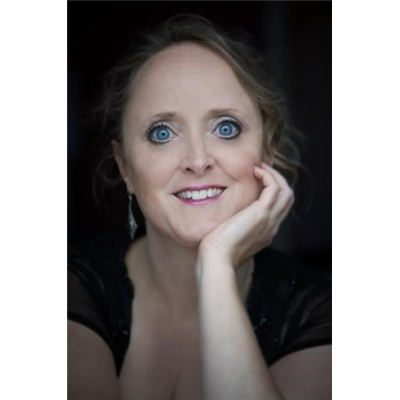 |
When researching my biographies of Lizzie Siddal and Kate Perugini, I kept coming across a mysterious princess, attending studio parties, helping fellow artists in times of need, and being linked with several scandals. I was amazed to discover Princess Louise was a daughter of Queen Victoria and Prince Albert, and a well-respected sculptor. Her life and legacy has been locked away in the Royal Archives ever since her death in 1939, but her work was stunning, and her life fascinating. Researching her biography was like being a detective, so I titled my book The Mystery of Princess Louise. Lucinda Hawksley is an author, broadcaster, lecturer and award-winning travel writer, who has worked as an interviewee, consultant and presenter on TV and radio shows worldwide. She has written three biographies of female artists: Kate Perugini (née Dickens), Princess Louise and Lizzie Siddal. Her other books include, Victorian Christmas, Dickens and Travel, Letters of Great Women, Elizabeth Revealed, Dickens and Christmas, The Writer Abroad, Bitten by Witch Fever: Wallpaper and Arsenic in the Victorian Home, Charles Dickens and his Circle, Moustaches, Whiskers & Beards (Facial Hair in Art), and March, Women, March: Voices of the Women’s Movement. Lucinda’s many TV credits include Miriam’s Dickensian Christmas, a show she created with the Dickens-loving actress Miriam Margolyes, Charles Dickens with Gyles Brandreth, World’s Greatest Paintings, A Very Country Christmas, Paul O’Grady’s Great British Escape, The Project, Landscape Artist of the Year, Queen Victoria and her Tragic Family, Cathedrals of Steam – Europe’s Most Famous Train Stations, Missing Masterpieces, Queen Victoria’s Children, Mrs Dickens’s Family Christmas, Dickens and Health, Find My Past: The Staplehurst Rail Crash, Charles Dickens’s Secret Lover and Charles Dickens and the Invention of Christmas. Lucinda co-wrote and narrated The Real Sherlock, a six-part podcast series about Arthur Conan-Doyle, for Audible. She has also written and narrated, for Audible, the introductions for Our Mutual Friend and The Mystery of Edwin Drood. Her other voice-over work includes art gallery audio guides and a children’s audio guide to Stonehenge. She is a great great great granddaughter of Charles and Catherine Dickens, and a Patron of the Charles Dickens Museum in London; she is also a Patron of the De Morgan Foundation. In 2024 she became the President of the International Dickens Fellowship. |
|
| Thursday, 16 March 2028 |
| Larry Adler, Harmonica Genius |
| Gary Italiander |
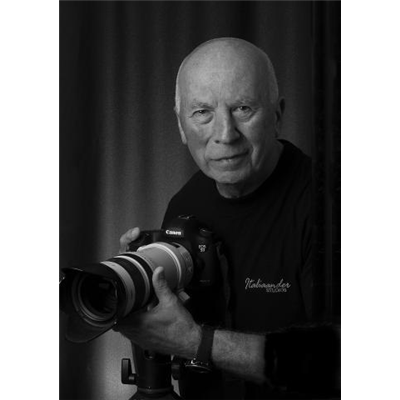 |
The remarkable and fascinating story of the life of Larry Adler, the harmonica maestro and raconteur who was a personal friend of the photographer, Gary Italiaander. Gary’s talk is illustrated with many images (some taken by him), recordings, video extracts and many anecdotes about Adler’s friends and associates such as Chaplin, Duke Ellington, George Gershwin, Billie Holliday. Includes some live performance on the harmonica. Gary Italiaander is author of ‘Reflections, A Tribute to Larry Adler’ with additional reflections of their own by Sting, Sir George Martin, Cher, Itzhak Perlman and many others. |
|
| Thursday, 18 May 2028 |
| The Meanings of Goya |
| Kathy McLauchlan |
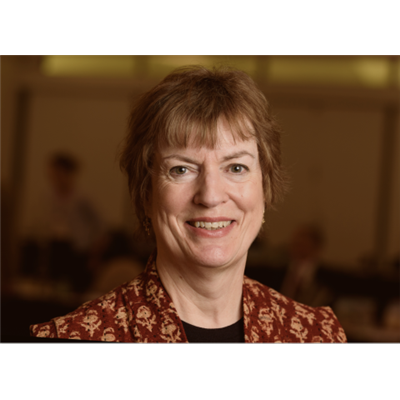 |
Viewing Goya’s paintings at the Prado in Madrid can be a confusing experience. It may seem that the many works attributed to him are actually by different artists: a painter of interior decorations, a portrait painter, a painter of nightmare visions. This talk tries to explain such contradictions and to indicate points of consistency that hold the œuvre together. Above all, Goya will be revealed as an observer, relentless in his desire to record the appearance and character of the people around him. I will suggest that in his later works he sought to look beyond external appearances; that the more fantastical paintings, far from being diversions from reality, actually grew out of his close engagement with contemporary society. Kathy writes of herself: A lecturer specialising in 19th-century art history, I am currently a course director at the Victoria & Albert Museum, organising courses and study days on the history of art and design. I teach at several institutions, including Art Pursuits. I am a graduate of Oxford University and the Courtauld Institute, with a PhD on French 19th-century painters in Rome. I am available for both individual lectures and study days. In addition to the subjects on my page I can cover: • Sketch and Finish in 19th-century French Painting • Montmartre fin de siècle • Mucha and the Slav Epic • America and the Sublime Landscape |
|
| Thursday, 16 November 2028 |
| The Art of Remembrance |
| Sophie Matthews |
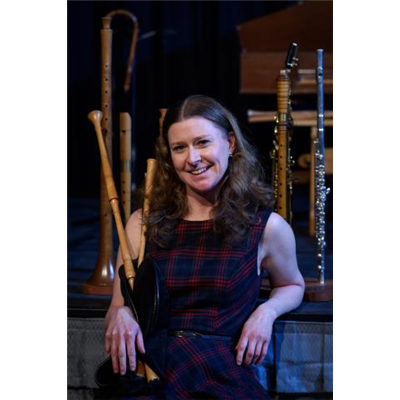 |
November 1918 saw the end of an international conflict that saw the highest casualty rate to that date. Every nation had to decide how to honour and remember its dead. This lecture explores the powerful art and design behind the memorials that mark the landscapes of the Western Front. From the solemn minimalism of Edwin Lutyens’ Thiepval Memorial to the poignant symbolism of the Menin Gate and the artistry of battlefield cemeteries, we’ll examine how architecture, sculpture, and landscape design were used to express grief, sacrifice, and national identity in the aftermath of unprecedented loss. Through archival images, design sketches, and on-site photography, the session reveals how these memorials shaped collective remembrance—and continue to speak to us over a century later. Sophie is a musician well-known for her prowess on the English border bagpipes and has become one of the foremost players of the instrument in the UK. She also plays a variety of early woodwind instruments such as shawm, rauschpfeife, crumhorm and recorder. She’s also one of a handful of British players of the baroque musette, an 18th century French bagpipe similar to the Northumbrian smallpipes. When not touring with GreenMatthews, Sophie also makes instruments (she made her own baroque oboe) and works with respected luthier Tony Millyard on his flutes. Sophie is self-taught on all of her instruments. |
|